do less
- Book Title: Four Thousand Weeks: Time Management for Mortals by Oliver Burkeman
- Date completed: May 28, 2026
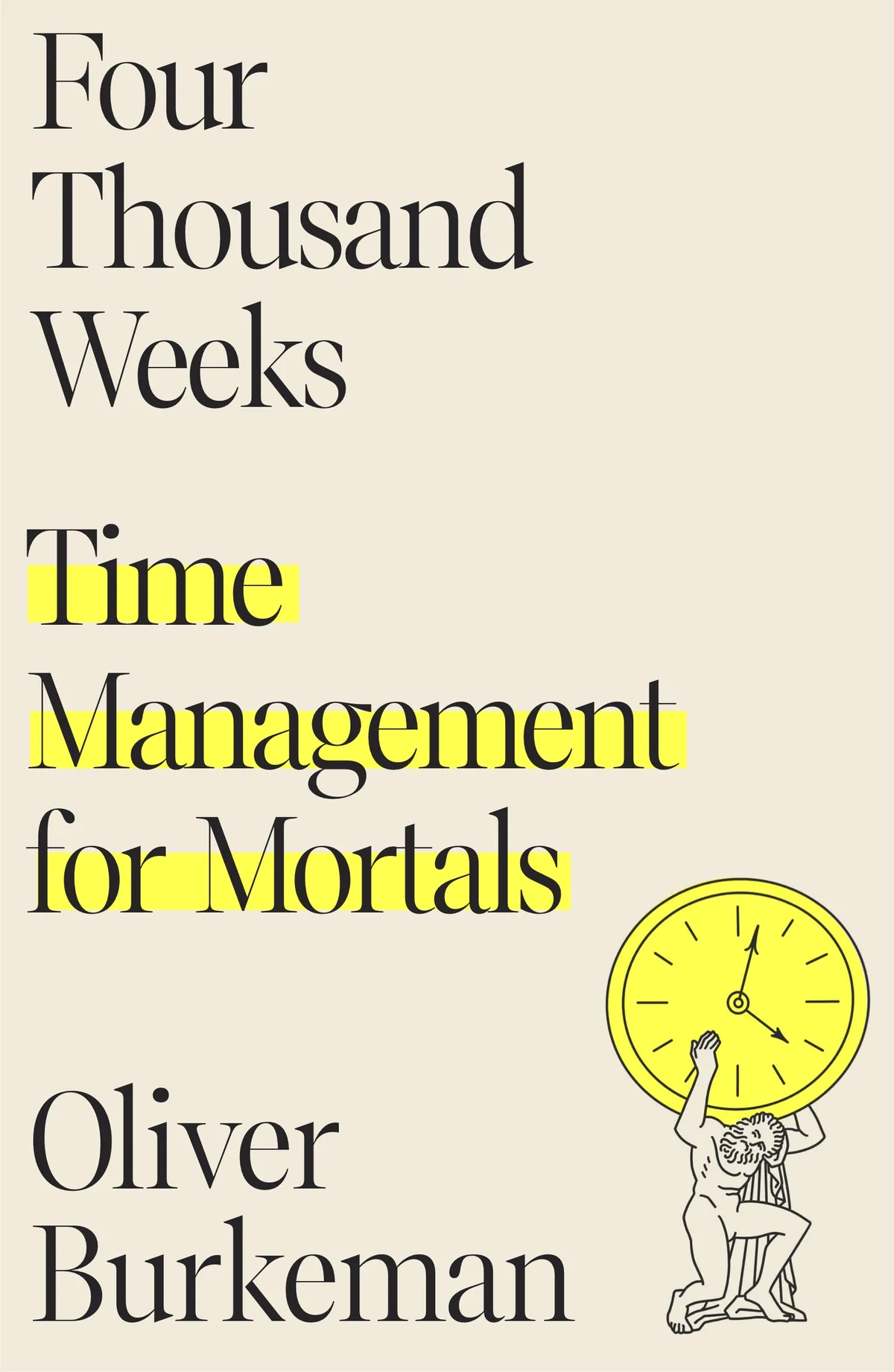
As the title suggests, this is a book that focuses on reminding us of the limited time one has on the planet—and how that should inherently affect how we think about and use our time. Oliver puts this into perspective: if we were lucky enough to reach the age of 80, we would only have 4000 weeks.
Productivity culture and the illusion of control
In the productivity and time management space around the internet, it's a very “go-go-go” mindset. With the bouts of inbox-zeroes or the popular Getting Things Done methodology, where the focus is on maximizing the amount of items we could check off our list, Oliver emphasizes on:
The control that we do not actually have: We think we can eventually get things under control, but we… can't. We can fit everything nicely into our planners, to-do lists, and fancy apps, but some things pop up that can derail everything. And the more we fit into our schedules, the more anxious we feel. Not to also mention that we would feel more rushed in getting through these tasks as well; we want to jump into the next one immediately.
This pulls me back to the concept of the locus of control. When my classmates and I were first introduced to the concept in an introduction to psychology course, it was more so focused on how certain individuals may emphasize too much on things that are outside their locus of control. It was meant as an example of one that places their blame on external sources (people, circumstances, etc.) for their misfortunes and not enough reflection on the things that they do control.
However, in the productivity space, I certainly think that sometimes there is an overemphasis on the internal aspect of the locus of control one has. The lack of flexibility, empathy for oneself, and a go-go-go mindset leads to this almost cold approach to growth. And as an effect of that, there tends to be a lot of self-blame when things don't go the way we want. And Oliver reminds us… that there are days that this would certainly happen.
Although it can be depressing to think about how we're never going to be able to do everything we ever want to do as time is limited (and not to mention the 101 other reasons we can't do what we want to do, such as financial limitations, familial expectations, and everything else), Oliver reminds readers that this could also be a good thing.
Now… you can prioritize and choose what you want to focus your finite time on to do what truly matters to you, your goals, and values.
The efficiency trap
Being “efficient” is a trap. If you've watched any videos or explored the AI space, you've definitely heard of the idea that using AI can free up a lot of time, help the user become more efficient, reduce workload, etc. However, another side to that is that corporations would want their workers to now replace that freed-up time to do even more work.
In a general productivity sense, Oliver shares an example of this with “Sisyphus's Inbox,” where when one gets really efficient at responding to emails, the result of that would be… getting more emails. It's a never-ending loop, you see?
Procrastination as prioritization
My personal favorite concept from this book is that you have to learn how to procrastinate well. It's a fun way to describe and explain “prioritization.” When I was growing up, teachers would remind us that we would need to “prioritize” what is important. Typically, the right answer to that would be to put your academics over everything else, but you would also need to remember to be an all-rounder, participating in extracurriculars, being a filial child, sleeping enough, and exercising sufficiently. In essence, you are still expected to attempt all of them perfectly.
Oliver doesn't buy into that, and I think nobody should. When you have too much on your plate, you need to selectively procrastinate on the other items. Or even better, put them in a list of things you could possibly pick back up but have no obligations to if you never want to. We need to accept that you can't do 100% of everything all at once. You put your limited eggs in the baskets you want, and every so often some baskets have unequal distributions of the number of eggs. It is okay! You can always “rebalance” your eggs and shift this set number of eggs into the baskets.
Constraints and meaning
Giving meaning to your constraints. Although not specifically time-management or productivity focused, there was an example of this in the book that I thought stood out. Oliver notes the ever-present fear of settling in the modern dating scene. He argues that 'settling' for a partner is not settling for what you have (and constantly thinking about the what-ifs) because the waiting/constant search for a flawless partner is another form of settling, but for an endless life of searching.
Of course, from an objective standpoint, this doesn't mean you stay in a relationship because you fear the other side of the coin of continual searching. It is a reminder to be able to see that being committed to one thing (it could be anything, i.e., marriage, a relationship, or a hobby) isn't exactly sacrificing another life you think could be better, but because you're opting to no longer be distracted by the infinite imaginary alternatives.
Notes to self
- Although it may sound like planning ahead (I love my TickTick/Todoist & Google Calendar & have had my fair share of consuming productivity content on the web) can feel futile in the grand scheme of things, it isn't something I shouldn't do. It helps create structure around my life and helps me keep track of the different things in my life in one place (work, hobbies, academics, relationships), but it must be flexible to the realities of day-to-day life. Things can change, stuff pops up, and it shouldn't derail my entire life. A to-do list or a plan (no matter how far ahead or near) is just a reflection of my current intentions. I could feel the same in a day, but not for another, and things can shift!
- Even if you are to be independent of your time completely, what is the good when the people around you aren't afforded that luxury?
- It is fine to put a pause on certain things when they don't serve you or aren't your top priority at the present moment.
Food for thought?
Where in your life or your work are you currently pursuing comfort when what’s called for is a little discomfort? Are you evading the anxiety of confronting your human limitations and your lack of control over the future?